top of page

>> SYSTEM LOG //

THE
WALKER
EXCAVATIONS
Visit Our Exhibition!
Click here for tickets
ANCIENT ARTIFACTS
A unique exhibition showcasing strange objects from the depths of time
that has been dug up only to remain anomalies stuck in some fringe realm of history, and should not even exist at all
BEGINNINGS OF EXCAVATIONS
DESCRIPTION
Throughout history, there have been discoveries that have completely changed the way we perceive the past. One such discovery was the sensational work of young researcher Lily Cadieux, whose findings drew the world's attention to traces of a forgotten civilization. Her discoveries quickly gained groundbreaking status and became the beginning of a new branch of archaeology known as Walker civilization studies.
With the support of technology and funding from Red Nexus, Cadieux was able to continue her research, which led to the creation of the first exhibitions and museums showcasing these extraordinary artifacts. The most important of these was the Walker Excavations exhibition at the Palace of Fontainebleau, which attracted crowds of visitors and sparked the imagination of scientists and history enthusiasts alike.
These exhibitions became a symbol of a new era of research—a time when ancient mysteries and modern science come together to rediscover humanity's forgotten heritage.

GOUSSAINVILLE – THE HEART OF THE PAST
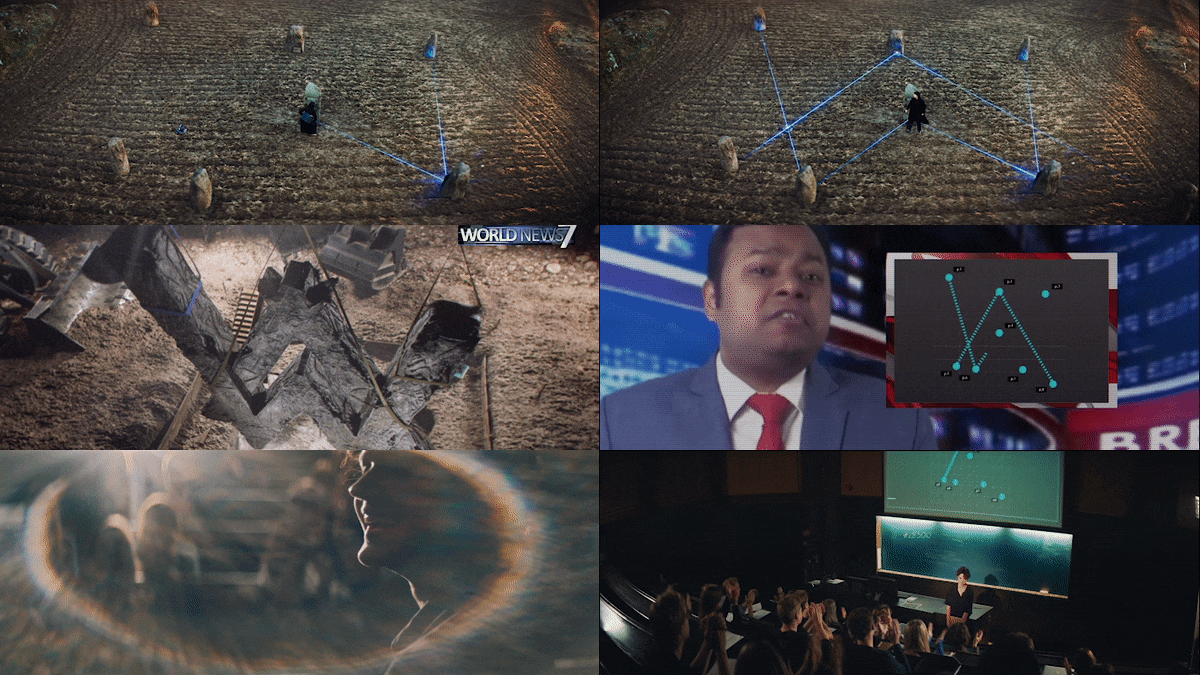
It all began in 2018, when a young French archaeology student, Lily Cadieux, made a groundbreaking discovery in France. After months of research and analyzing old books, the girl came across a recurring motif and pattern - eight dots.
Over time, the dots began to connect, literally... A month before her discovery, she came across seven rock formations consisting of eight stones arranged in the same pattern as in her notes - it couldn't be a coincidence. One of these locations was nearby, in the small town of Goussainville near Paris.
There, she found traces of a previously unknown ancient civilization, whose existence challenged the established certainties in the study of human history.
Her discovery quickly spread around the world, and Cadieux herself became one of the most recognizable figures in the world of science. The find opened a whole new chapter in research into the past — from that moment on, people began to talk about the so-called Walker civilization.
PARTNERSHIP WITH RED NEXUS
Shortly after her groundbreaking discovery, Cadieux was contacted by the Red Nexus corporation, which offered her financial and technological support. The company promised access to state-of-the-art equipment and funds for expeditions, which would allow the young archaeologist to further explore the mysteries of the Walkers.
Thanks to this collaboration, Lily was able to conduct research on different continents, and the results of her work became the foundation for the creation of two key museum institutions dedicated to the newly discovered civilization.
FOUNDATION OF MUSEUMS
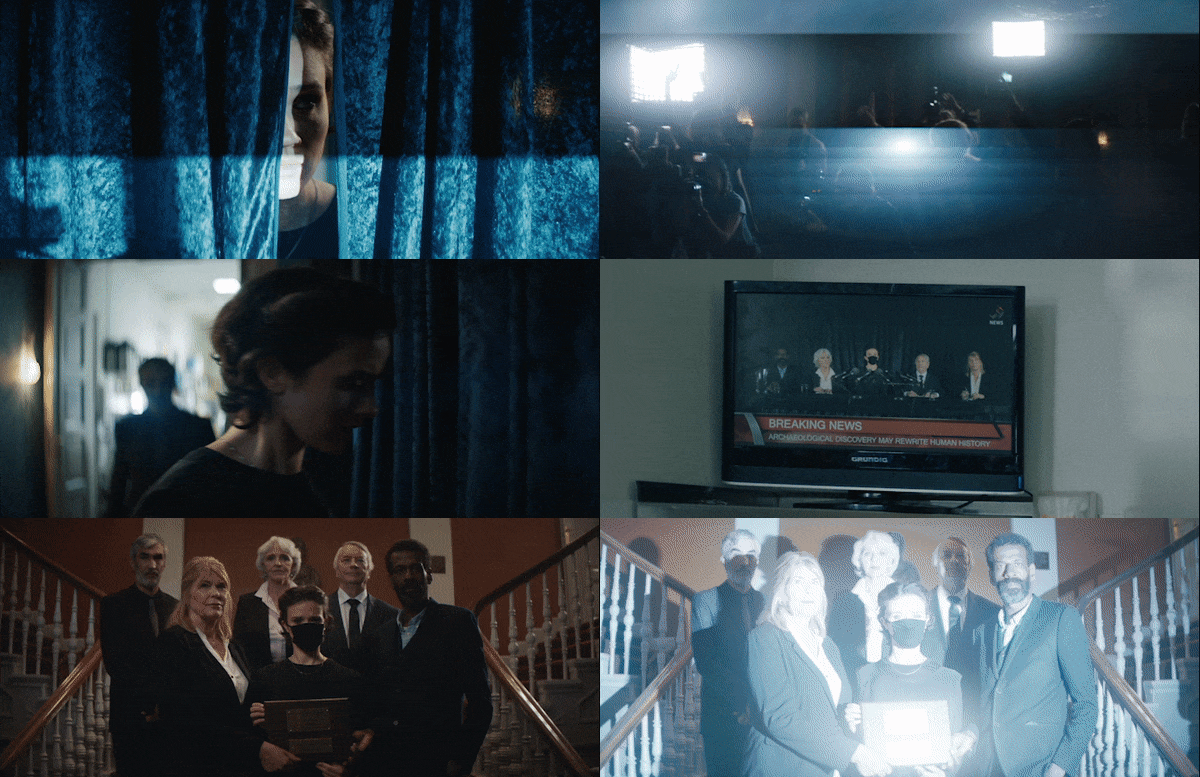
The first museum was opened in France, in the Palace of Fontainebleau, one of the country's most important historical monuments. The second was established in Norway, in the Norges Bank building. Both places quickly became centers of science and culture, attracting researchers, historians, and enthusiasts from around the world.
FONTAINEBLEAU — FROM ROYAL RESIDENCE TO WALKER CIVILIZATION
The Palace of Fontainebleau, located about 55 km southeast of Paris, was the residence of French monarchs for centuries. From the Middle Ages to the time of Napoleon, it was the scene of political and cultural events of global significance. In 1927, it was transformed into a national museum, and in 1981, it was added to the UNESCO list.
In the 21st century, the palace gained new significance. Following Cadieux's discoveries, an exhibition entitled The Walker Excavations was organized inside the palace, prepared in collaboration with Red Nexus and the National Museum in Fontainebleau.

Walker Excavations at the Château of Fontainebleau

Walker Excavations at the Norges Bank
WALKER EXCAVATIONS EXHIBITION
The historic halls of the palace displayed artifacts that could completely change the way we perceive antiquity. Among them were:
-
the paintings Heading Home and Hiding in the Dark,
-
Prophecy Disks,
-
ritual robes and cult objects,
-
enigmatic technological objects that do not fit into any known culture.
All the exhibits had a common stylistic language: hooded figures, geometric symbols, and ritualistic gestures.
Some researchers even suggested that some of the ornaments at Fontainebleau itself—such as the symbol resembling the intertwined letters “AW” decorating the main gate or the strange “AW”-like symbol on the door of one of the rooms—could indicate the ancient influence of this civilization on European art and architecture.


%20(1).jpeg)
.jpg)
bottom of page